
Cornelius Elementary was envisioned as more than a replacement school—it is a civic anchor designed to reflect, support, and celebrate the richly diverse community it serves.
REBUILDING WITH PURPOSE
The existing conditions of the previous school were no longer serving the students and community. Aging facilities lacked air conditioning and consistency across classrooms. Students with individual development plans were pulled into hallways to work at desks facing walls. A single drinking fountain served the entire school. The library—rich in both English and Spanish collections—had no room left to grow.
But within these challenges lay opportunity. A large site allowed the new school to rise alongside the existing one, maintaining continuity for students during construction. And through a shared vision with community leaders, a portion of the original building will live on—reimagined as a community center—ensuring the school’s legacy as a place of care, connection, and possibility endures.
DESIGNED WITH (NOT FOR)
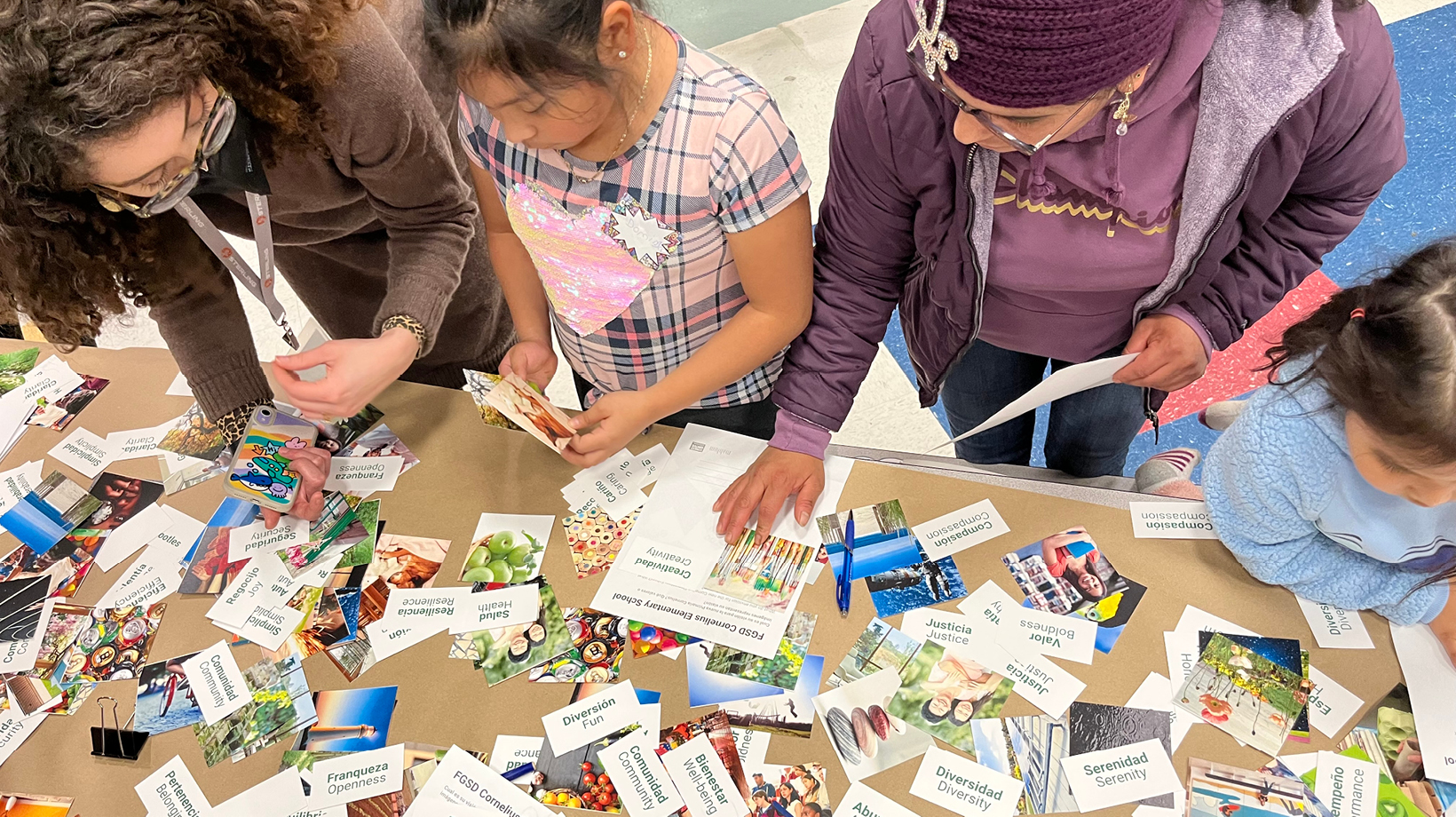
Shaped through an extensive bilingual engagement process with students, families, educators, the district, community organizations, and city leaders, the new Cornelius Elementary School emerged from a shared commitment to belonging, dignity, and opportunity.
A diverse Design Advisory Group (DAG) brought together voices from the City of Cornelius, Centro Cultural, the District’s Equity and Migrant programs, the public library, school leadership, parents, and board members.
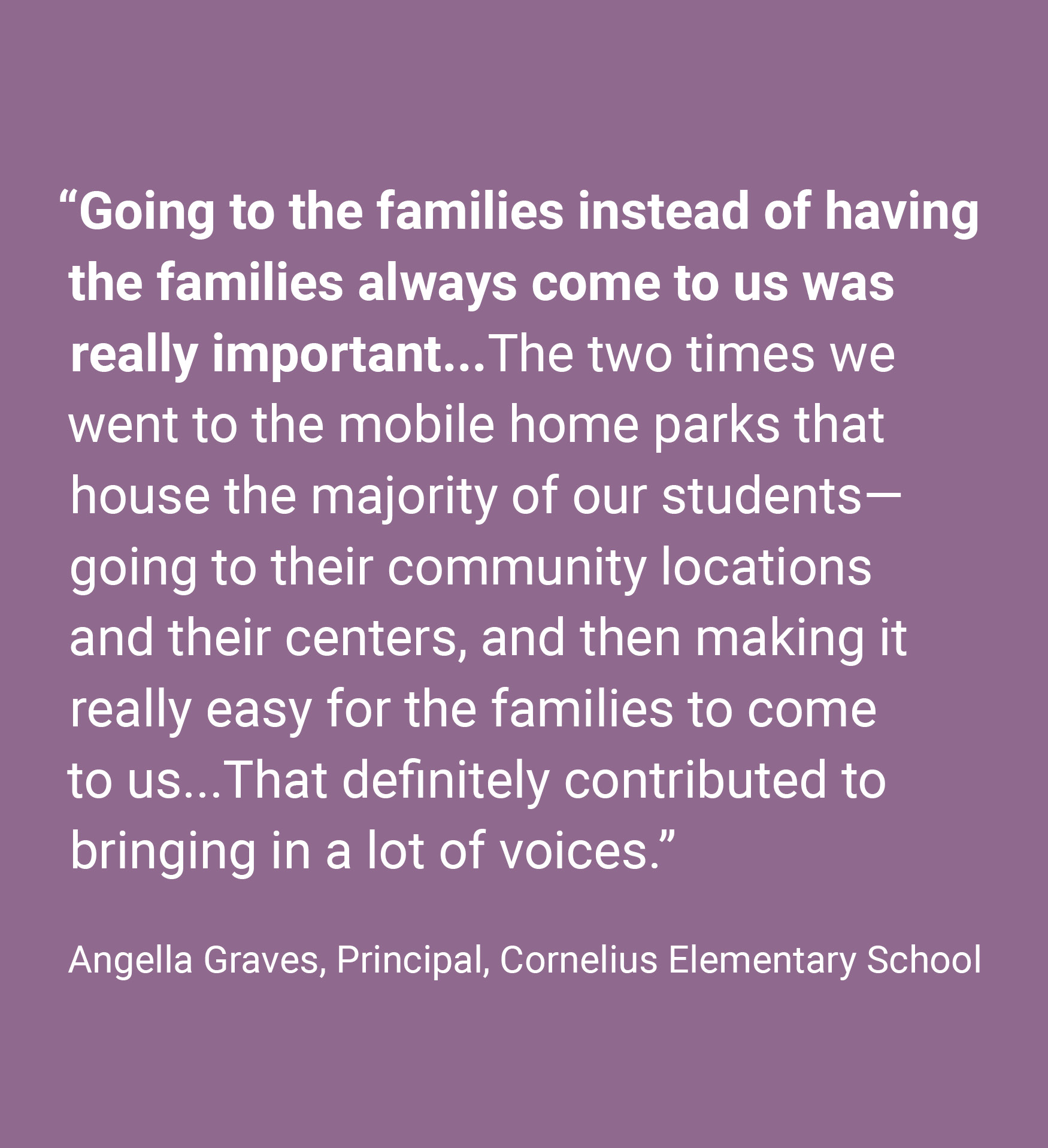
Through working sessions, focus groups, career day workshops, community events, and back to school gatherings, the team engaged in a multi faceted approach to hear from teachers, parents, district staff, and students. To ensure engagements were accessible and inclusive, the team presented in Spanish and English and visited families directly in mobile home communities, local food pantries, and community events. Insights from this process were rigorously documented and analyzed, leading to six core themes that guided the design:
- Be Comfortable and Safe
- Celebrate Community Connections
- Encourage Academic Excellence
- Invite Play
- Reflect Cornelius Culture
- Welcome and Include
ART, CULTURE, AND COMMUNITY
During the public engagement process, the community emphasized the importance of color as an expression of identity and culture. Color throughout the building’s exterior and interior became essential to ensuring students and families felt seen, represented, and welcomed.
Traditional Mexican papel picado—banners of colorful material with decorative cutout patterns commonly flown during celebrations—inspired the perforated metal screen that greets visitors around the exterior of the school.
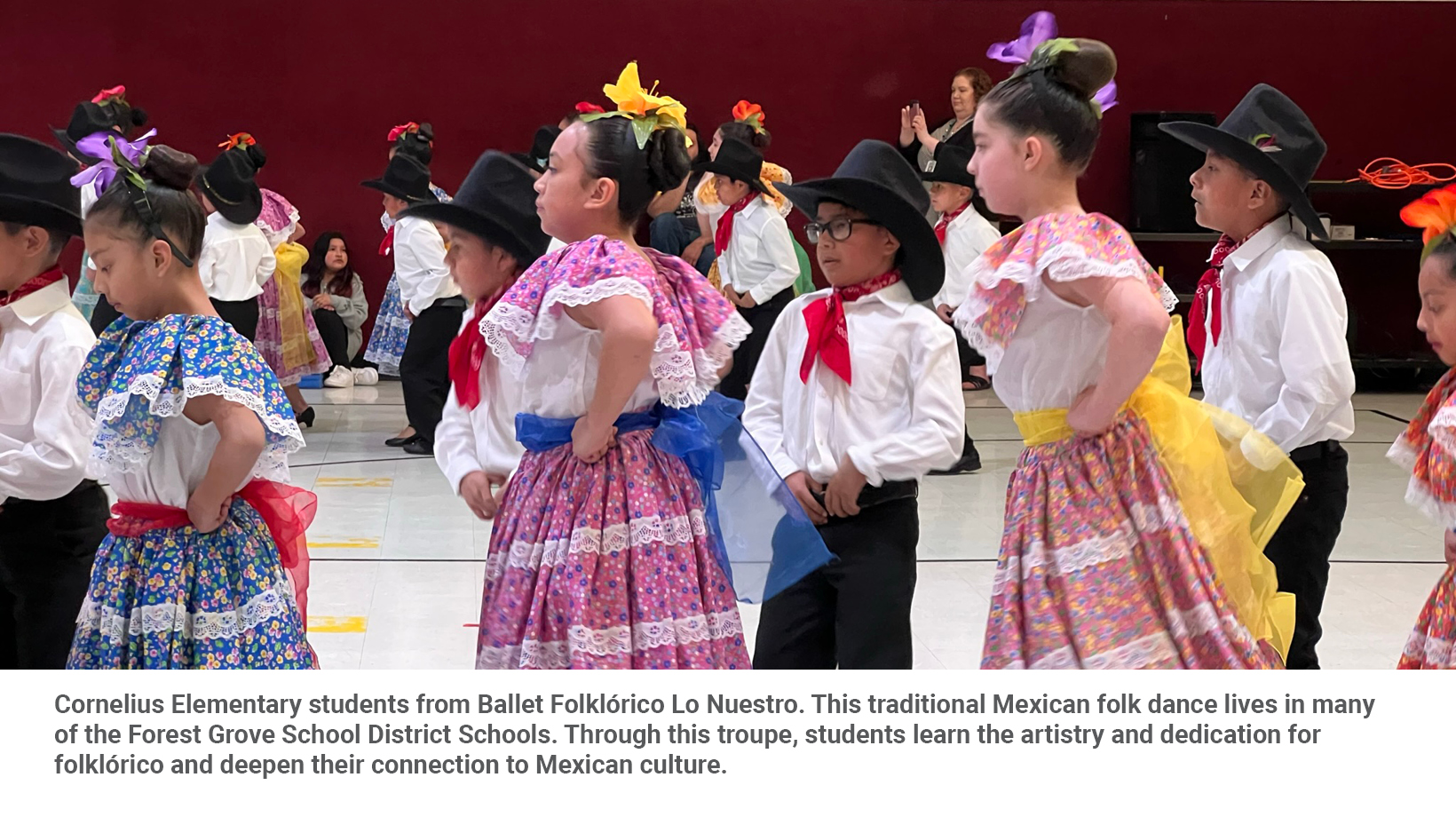
A custom mural by Mexico City–based artist Raul Urias captures the spirit and cultural richness of the community through motifs such as monarch butterflies, marigolds, and Ballet Folklórico, as well as scenes of students playing soccer, reading, and learning together. It offers a moment to pause, look up, and be inspired before starting the day.

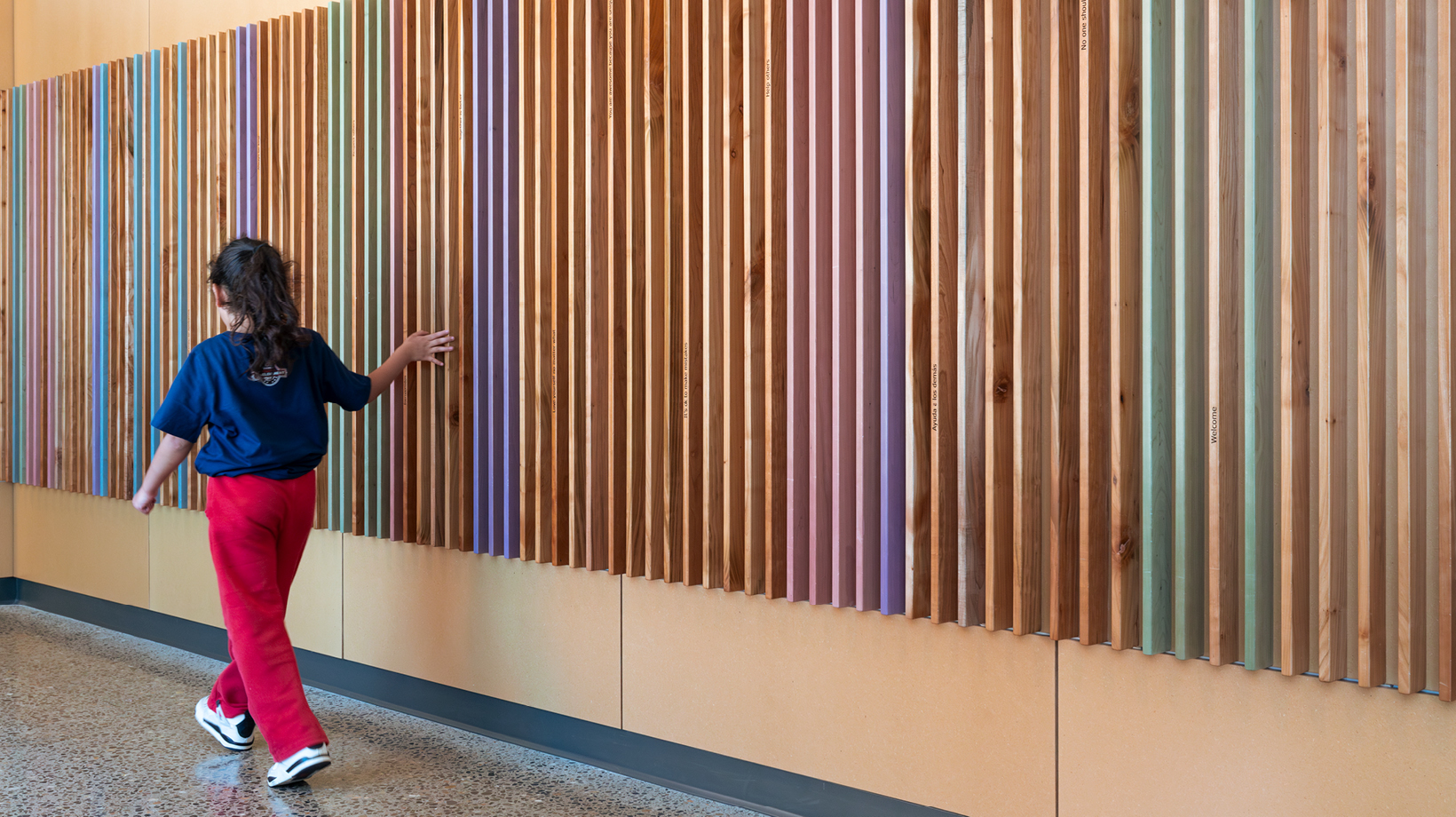
A reclaimed wood installation was crafted using memorial trees from the original school. Colorful vertical wooden slats engraved with affirmations encourage visitors to run their hands along the surface as they pass by, creating a quiet moment of connection to the artwork and the memories embedded within it.
RESPONDING TO LEARNING NEEDS WITH DESIGN
Ultimately shaped by students, educators, families, and community partners, the design responds directly to how the school operates day to day.
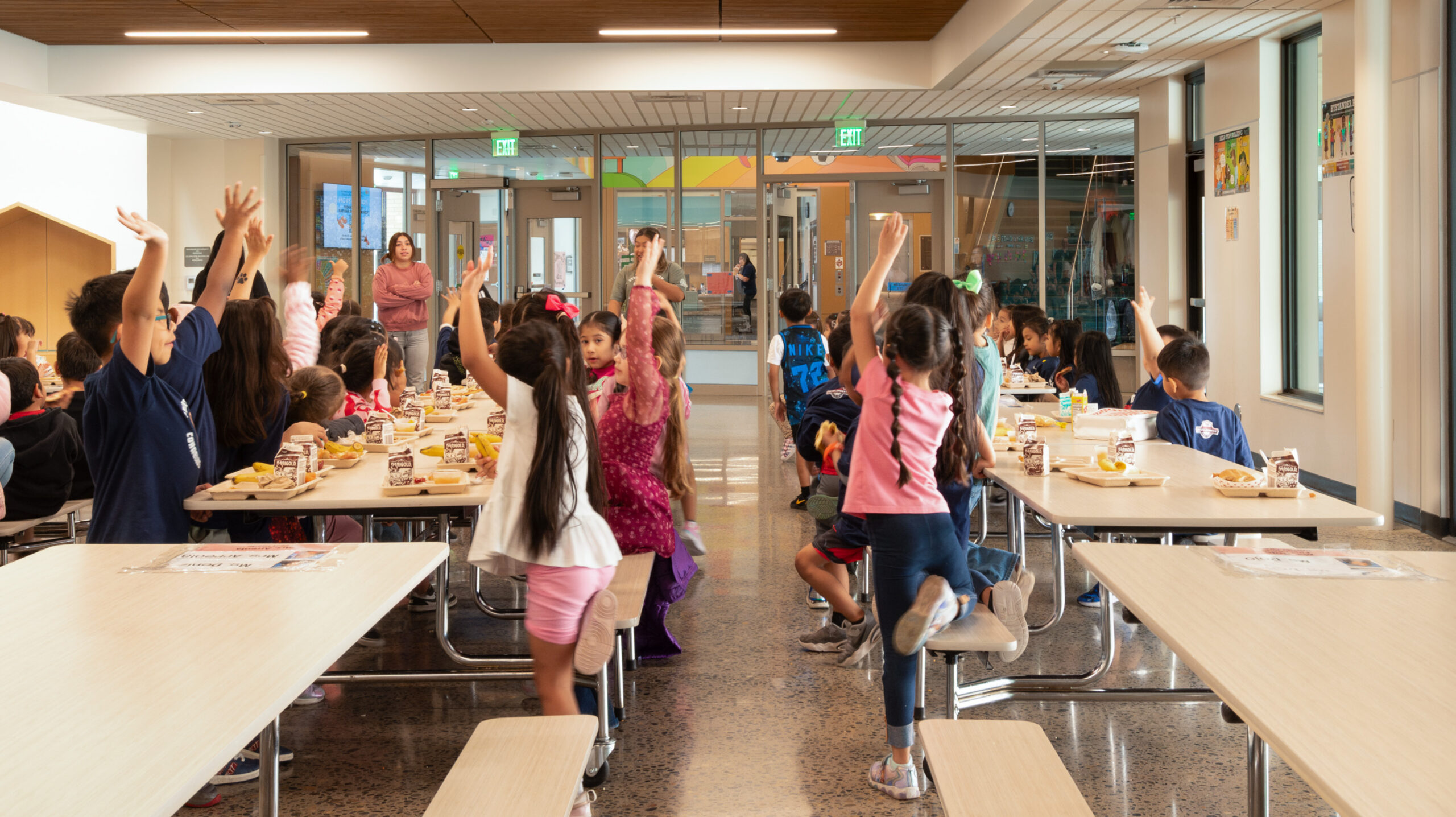
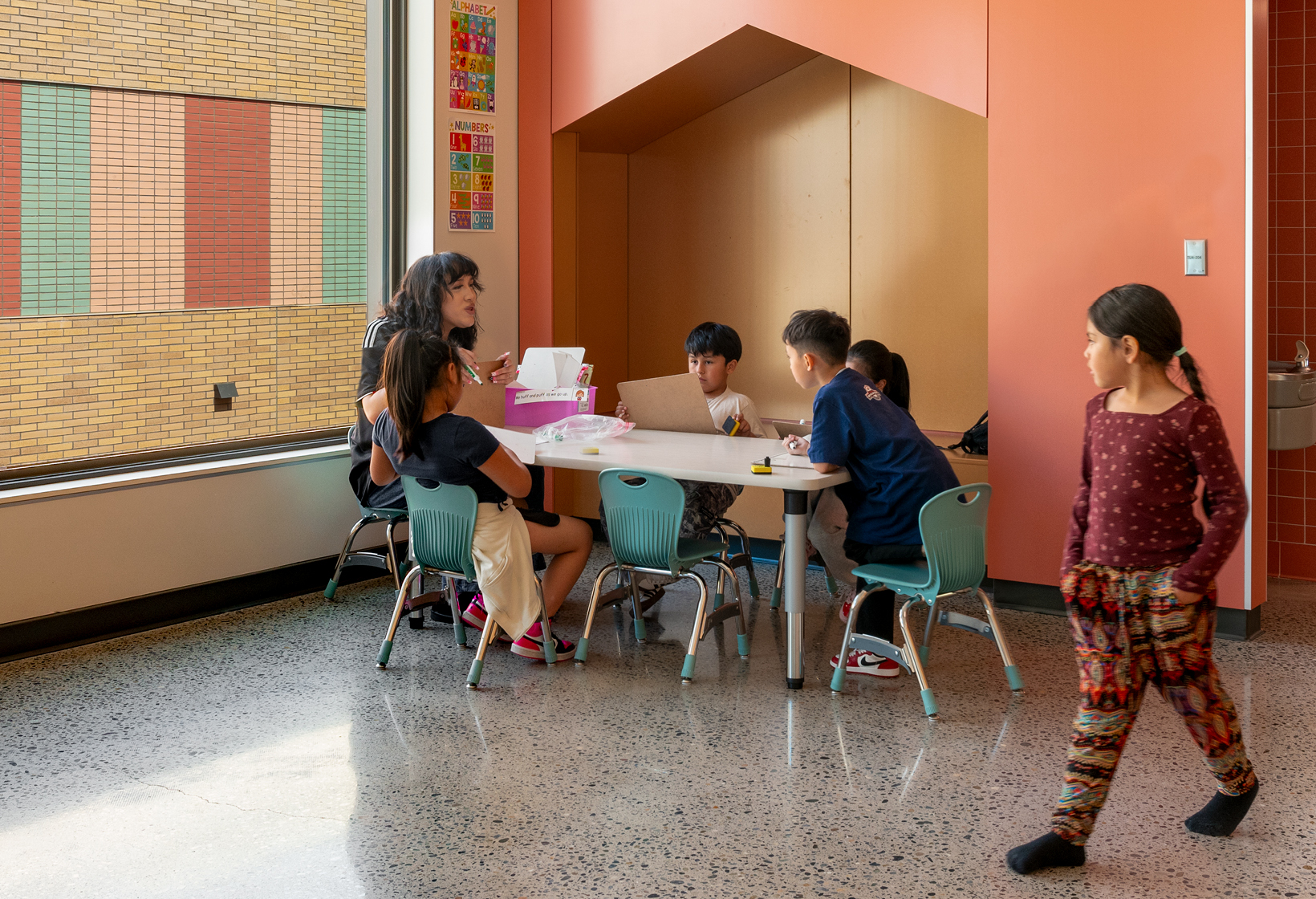
Designed to grow with the community, the PreK–4 campus is planned to seamlessly expand to 5th grade while centering the needs of early learners through secure, dedicated outdoor play areas. Classrooms are sized and equipped for co teaching, with adaptable layouts, ample built in storage, and adjoining connections that support movement between English and Spanish instruction. Distributed activity areas—located at the heart of each classroom wing—provide spaces for small group learning, interventions, and testing, transforming what was once a stigmatized pull out experience into a natural extension of the school day.
Beyond the primary playground, outdoor learning zones offer additional opportunities for exploration. Shared spaces and core functions are right sized for a 500 student population, including a library hub that flexes into a community space. Family engagement is supported through dedicated areas with access to technology and resources, while secure, accessible storage solutions make it easy for students to move between classrooms and learning settings throughout the day.
SUPPORT BEYOND THE CLASSROOM
Forest Grove School District’s Migrant Services program provides critical continuity for students navigating the uncertainty of migrant work and the disruption of frequent moving—removing barriers that can stand in the way of consistent learning. At Cornelius, a dedicated Family Resource Center advances this commitment by offering access to essential services with dignity.
The design team worked with the city to retain a portion of the original school for community use, helping to facilitate a much needed support venue while significantly reducing demolition waste.
The life of the school extends beyond its walls. The community voiced the importance of youth soccer programs, and through cost optimization, funds were secured within the original budget to create a turf field with added lighting to serve as a multi purpose field at the heart of the school. The fields fill with soccer players after hours, and celebrations such as Día de las Madres, Día del Niño, Ballet Folklórico performances, and bilingual movie nights transform the campus into a cultural commons where identity and belonging take center stage.

HIGH PERFORMANCE WHERE IT COUNTS
Early energy modeling sharpened the design team’s focus, revealing that the most impactful investments were high performance glazing and a highly insulated roof assembly. By upgrading to triple glazed fiberglass windows and exceeding code minimums for roof insulation, the design team significantly reduced energy demand—resulting in lower operating costs than the previous school despite an expanded program—while also improving thermal comfort throughout the building.
Natural, recycled, and low or non emitting materials were selected across all systems—from structure to finishes—contributing to healthier indoor air quality and a more supportive learning environment for students and staff.
Additionally, a 235 kW PV solar array was installed across the entire roof, creating a reliable battery backup that allows the emergency system to operate more efficiently while downsizing the required fossil fuel powered generator.
—ANGELLA GRAVES, PRINCIPAL, CORNELIUS ELEMENTARY SCHOOL